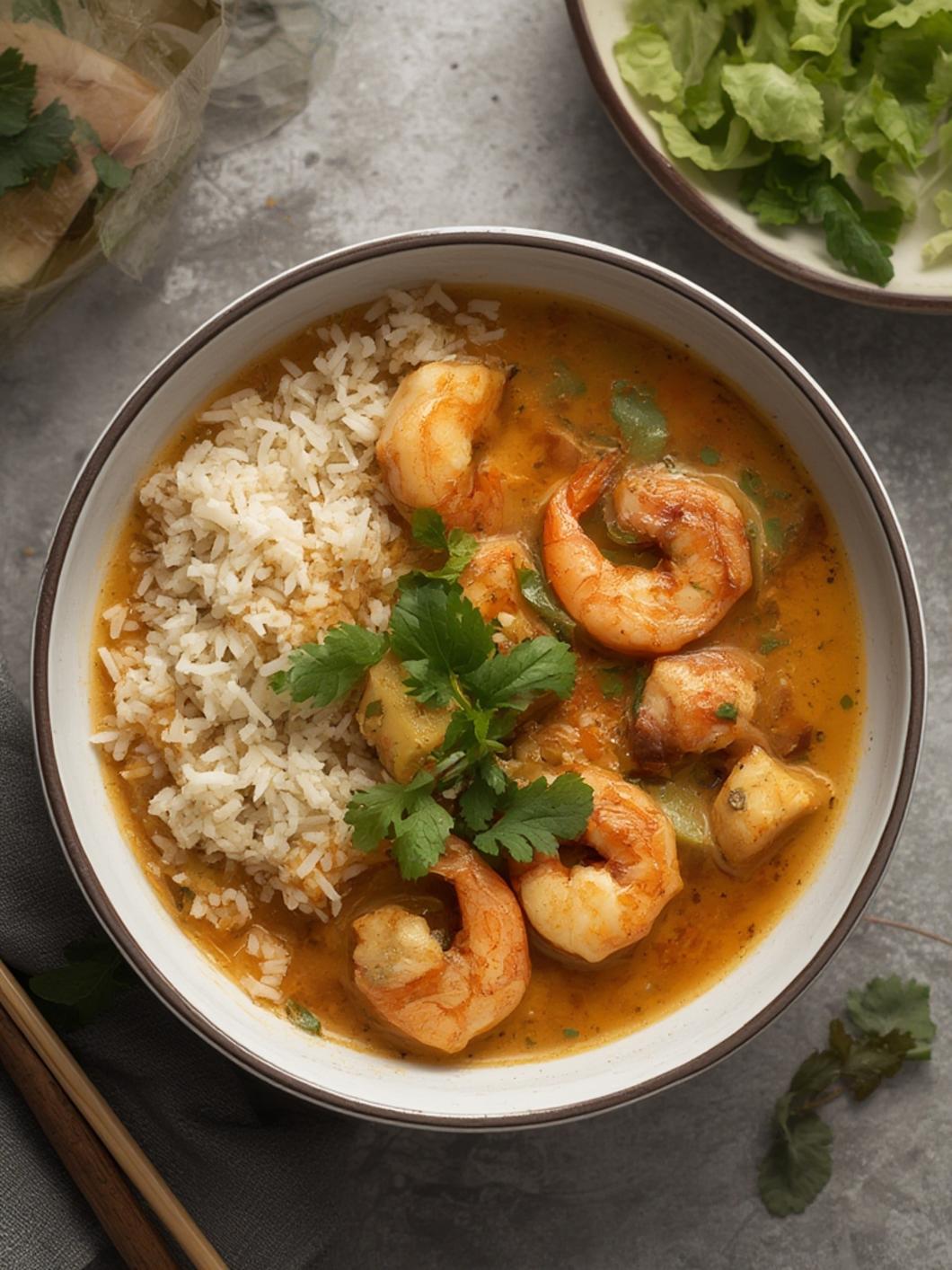
The aroma of coconut milk simmering with fragrant Thai spices creates an irresistible invitation to dinner. When you’re craving something both exotic and comforting, Thai Coconut Curry With Shrimp delivers all the bold flavors and creamy textures you desire. This vibrant dish balances the richness of coconut with the brightness of lime and the subtle heat of curry paste, making it a perfect weeknight meal that feels like a special occasion. Thai Coconut Curry With Shrimp also offers the versatility to adjust spice levels and ingredients based on your preferences, ensuring a customized culinary experience every time.
Ingredients & Kitchen Tools for Thai Coconut Curry With Shrimp
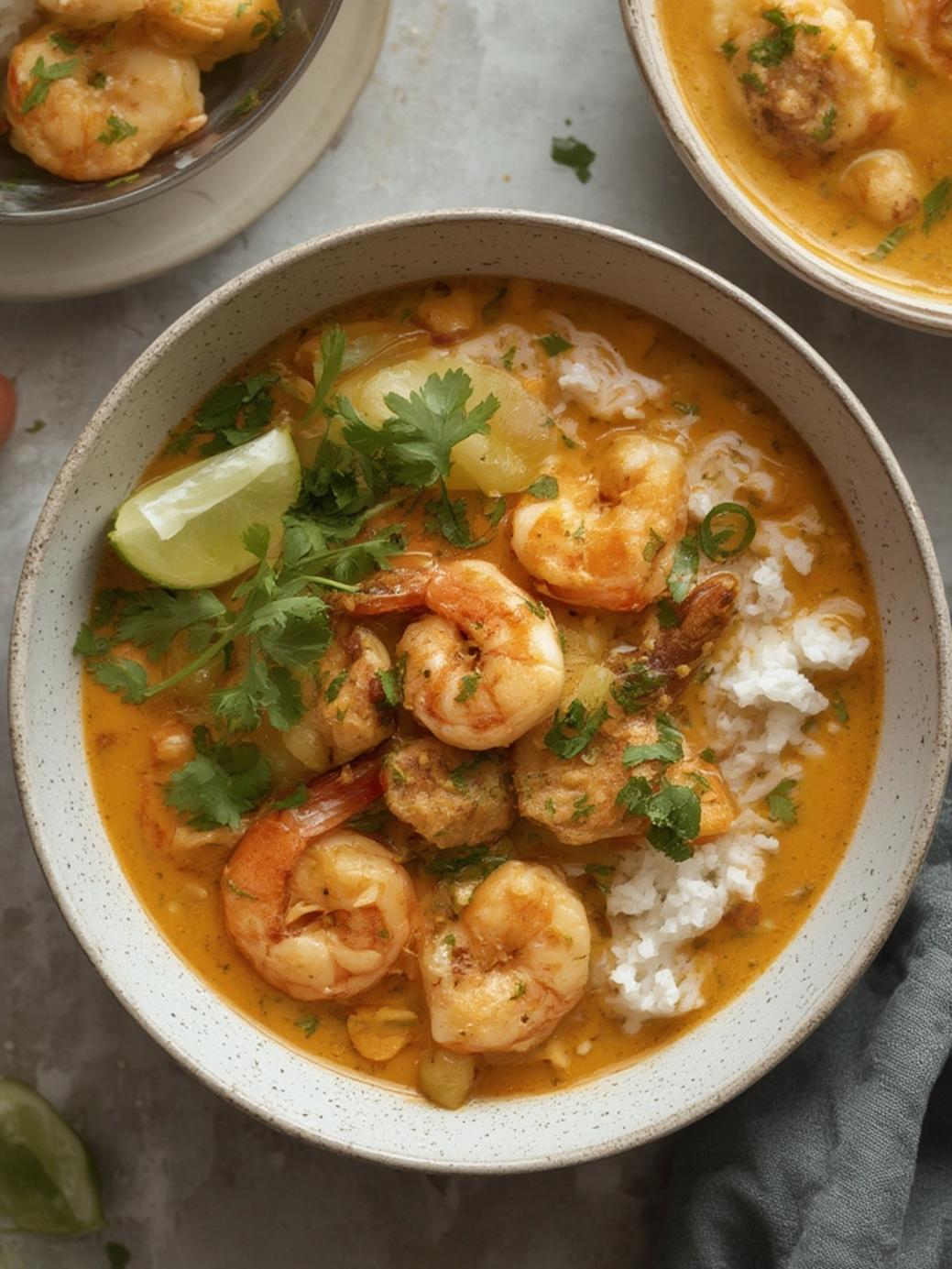
For the Curry Base:
– 1 pound (450g) large shrimp, peeled and deveined
– 2 tablespoons vegetable oil
– 3 tablespoons Thai red curry paste
– 2 cans (13.5 oz each) full-fat coconut milk
– 1 tablespoon palm sugar or brown sugar
– 2 tablespoons fish sauce
– Juice of 1 lime
– 1 red bell pepper, sliced
– 1 yellow onion, thinly sliced
– 2 garlic cloves, minced
– 1 tablespoon fresh ginger, grated
For Garnish:
– Fresh cilantro leaves
– Thai basil leaves
– Sliced red chili peppers
– Lime wedges
Kitchen Tools:
– Large wok or deep skillet
– Sharp knife
– Cutting board
– Wooden spoon
– Measuring cups and spoons
– Garlic press (optional)
– Microplane or grater for ginger
Substitutions:
– Chicken or tofu can replace shrimp
– Green curry paste instead of red for a milder flavor
– Light coconut milk for fewer calories
– Brown sugar or honey instead of palm sugar
Prep & Cooking Time for a Perfect Thai Coconut Curry With Shrimp Dish
– Preparation Time: 15 minutes
– Cooking Time: 20 minutes
– Total Time: 35 minutes
– Serves: 4 people
Step-by-Step Instructions to Make Thai Coconut Curry With Shrimp Easily
1. Prepare the shrimp: Pat the shrimp dry with paper towels and season lightly with salt and pepper. Set aside.
2. Create the curry base: Heat vegetable oil in a large wok or skillet over medium heat. Add onions and sauté for 2-3 minutes until translucent.
3. Add aromatics: Stir in minced garlic and grated ginger, cooking for 30 seconds until fragrant.
4. Incorporate curry paste: Add the Thai red curry paste and stir continuously for 1-2 minutes to release its flavors.
5. Add coconut milk: Pour in the coconut milk, stirring to combine with the curry paste. Bring to a gentle simmer.
6. Season the curry: Add fish sauce, sugar, and half the lime juice. Stir to combine.
7. Cook vegetables: Add sliced bell peppers and simmer for 5 minutes until slightly softened.
8. Add the shrimp: Gently place shrimp into the simmering Thai Coconut Curry With Shrimp sauce. Cook for 3-4 minutes until they turn pink and opaque.
9. Final touches: Turn off heat and add remaining lime juice. Taste and adjust seasonings if needed.
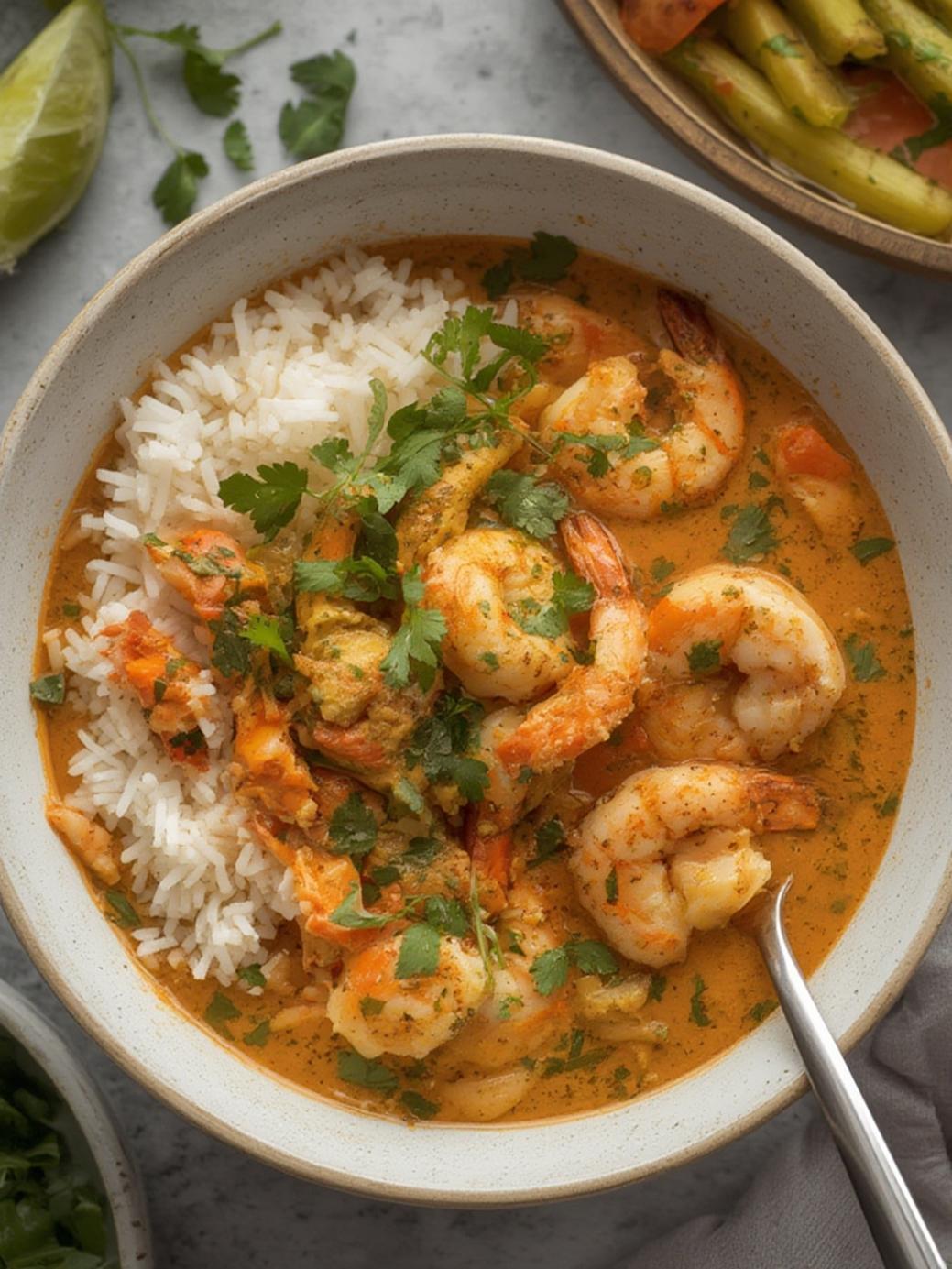
10. Serve: Ladle the curry over steamed jasmine rice and garnish with fresh herbs and lime wedges.
Nutritional Benefits of This Thai Coconut Curry With Shrimp Recipe
– Shrimp provides high-quality protein while remaining low in calories
– Coconut milk offers healthy fats that support brain function
– Ginger and garlic provide anti-inflammatory benefits
– Bell peppers contribute vitamin C and antioxidants
– Curry spices contain curcumin and other beneficial compounds
– Complete protein serving with approximately 23g protein per serving
– Contains essential minerals including zinc, selenium, and potassium
Variations, Substitutions & Cooking Tips for Thai Coconut Curry With Shrimp Lovers
– Vegetarian version: Substitute shrimp with tofu, tempeh, or additional vegetables
– Protein alternatives: Try with chicken, beef, or firm white fish
– Vegetable additions: Snow peas, bamboo shoots, or baby corn work beautifully
– Spice level adjustment: Reduce or increase curry paste based on preference
– Consistency control: Simmer longer for thicker sauce or add water/broth to thin
Common Mistakes to Avoid When Preparing Thai Coconut Curry With Shrimp
1. Overcooking the shrimp: Cook just until pink; overcooked shrimp become rubbery
2. Using low-fat coconut milk: Full-fat provides essential richness and authentic flavor
3. Adding all ingredients at once: Layer flavors by adding components at different stages
4. Skipping the aromatics: Ginger and garlic create the essential flavor foundation
5. Boiling rather than simmering: High heat can break coconut milk emulsion
Storage & Reheating Tips to Keep Your Thai Coconut Curry With Shrimp Fresh
– Store leftovers in an airtight container in the refrigerator for up to 2 days
– For best results, store curry sauce and shrimp separately
– Reheat gently on stovetop over low heat to prevent curdling
– Add fresh lime juice and herbs after reheating
– Not recommended for freezing due to texture changes in both shrimp and coconut milk
Conclusion: Final Thoughts on Making Thai Coconut Curry With Shrimp at Home
Making Thai Coconut Curry With Shrimp at home allows you to control ingredients while enjoying restaurant-quality flavors. The balance of creamy coconut, aromatic spices, and succulent shrimp creates a memorable meal that’s surprisingly easy to prepare. With just a few key ingredients and simple techniques, you’ll master this Thai classic that’s sure to become a regular in your dinner rotation. Whether you’re cooking for a special occasion or a cozy weeknight dinner, Thai Coconut Curry With Shrimp offers impressive results with minimal effort.
FAQs About Cooking Thai Coconut Curry With Shrimp
1. Can I use frozen shrimp for this recipe?
Yes, frozen shrimp work well. Thaw completely and pat dry before adding to the curry to prevent excess water from diluting the sauce.
2. How can I make this curry less spicy?
Reduce the amount of curry paste and omit the fresh chilies. You can also add a splash more coconut milk or a teaspoon of sugar to balance heat.
3. What’s the best rice to serve with Thai coconut curry?
Jasmine rice is traditional and ideal for absorbing the flavorful sauce, but basmati or even cauliflower rice works well too.
4. Can I prepare parts of this recipe ahead of time?
Yes! The curry sauce can be prepared a day ahead (without shrimp) and stored refrigerated. Add and cook the shrimp just before serving.
5. Is fish sauce essential for authentic flavor?
While traditional, you can substitute fish sauce with soy sauce or tamari plus a pinch of salt, though the flavor profile will be slightly different.
Have You Tried Our Recipe?
There are no reviews yet. Be the first one to write one.