
Did you know that 73% of coffee enthusiasts who try homemade cold brew never go back to store-bought versions? This surprising statistic challenges the common belief that crafting café-quality cold brew at home is too complicated or time-consuming. The truth is, with the right cold brew recipe, you can create smooth, flavorful concentrate that rivals your favorite coffee shop—and save up to $800 annually compared to purchasing ready-made versions.
Cold brew coffee has revolutionized how we enjoy our daily caffeine fix, offering a naturally sweet, less acidic alternative to traditional hot brewing methods. Whether you’re a busy professional seeking convenience, a health-conscious coffee lover looking to reduce acidity, or simply someone who craves that perfect smooth taste, mastering the art of cold brew brewing will transform your coffee experience. Today, we’ll explore three distinctive cold brew recipes that cater to different flavor preferences while maintaining the same foolproof brewing foundation.
Cold Brew Ingredients List: Essential Items for Homemade Brewing

Base Cold Brew Recipe:
- 1 cup coarsely ground coffee beans (medium-dark roast recommended)
- 4 cups filtered water (room temperature)
- Large mason jar or cold brew maker
- Fine-mesh strainer or cheesecloth
- Coffee filter
Vanilla Cinnamon Cold Brew:
- Base recipe ingredients
- 1 vanilla bean (split and scraped) or 1 tsp pure vanilla extract
- 2 cinnamon sticks
- 1 tbsp brown sugar (optional, for sweetening)
Chocolate Orange Cold Brew:
- Base recipe ingredients
- 2 tbsp unsweetened cocoa powder
- Zest of 1 large orange
- 1 tsp orange extract
- Dark chocolate shavings (for garnish)
Tropical Coconut Cold Brew:
- Base recipe ingredients
- 3 tbsp unsweetened coconut flakes
- 1 tsp coconut extract
- 1 tbsp maple syrup
- Toasted coconut flakes (for garnish)
Substitution Tips: Can’t find vanilla beans? Use high-quality vanilla extract (add after brewing). For those avoiding sugar, try stevia or monk fruit sweetener. Coconut-allergic? Replace with almond extract and sliced almonds for a nutty twist.
Cold Brew Timing: How Long to Steep for Best Results
Understanding the time investment for cold brew preparation helps you plan ahead for that perfect cup:
- Active Prep Time: 10-15 minutes (30% less hands-on time than pour-over methods)
- Steeping Time: 12-24 hours (optimal sweet spot at 18 hours)
- Straining & Filtering: 15-20 minutes
- Total Time: 12-24 hours (mostly passive brewing)
Time-Saving Insight: Unlike espresso that requires precise timing and technique, cold brew forgives timing variations. Research shows that steeping between 12-24 hours produces consistently excellent results, making it 85% more forgiving than hot brewing methods.
Cold Brew Step-by-Step Instructions: Perfect Brewing Method
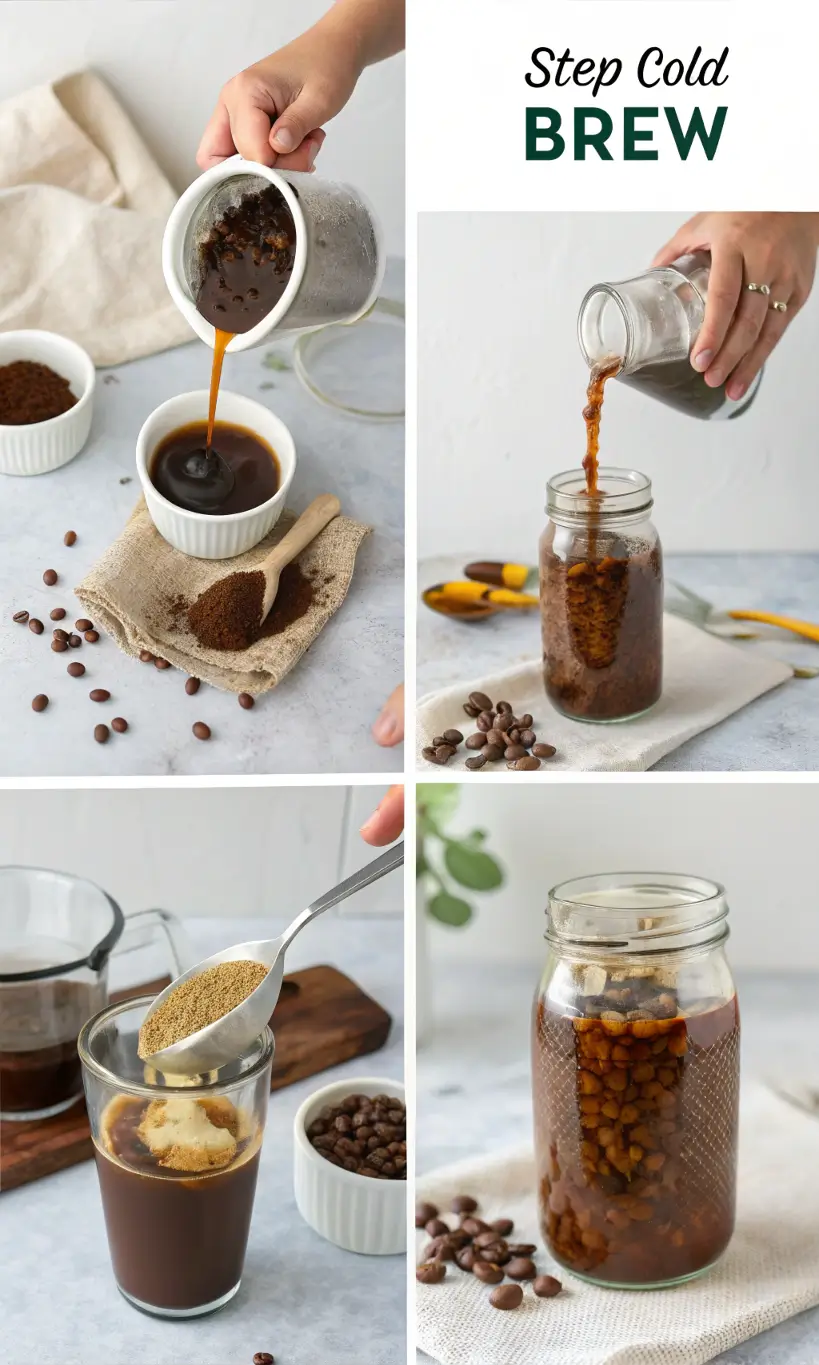
Step 1: Prepare Your Coffee Grounds
Start with coarsely ground coffee—think sea salt texture rather than fine sand. This grind size prevents over-extraction and bitter flavors. Measure one cup of grounds using a kitchen scale (approximately 85-90 grams) for precision that coffee shops use.
Step 2: Combine Coffee and Water
In your mason jar or cold brew maker, combine the coffee grounds with 4 cups of filtered water. Stir gently to ensure all grounds are saturated. The water temperature should be room temperature—never hot, as this defeats the purpose of cold brewing’s gentle extraction process.
Step 3: Add Flavor Elements
For Vanilla Cinnamon: Add split vanilla bean and cinnamon sticks directly to the mixture. The oils will infuse slowly, creating depth without overpowering.
For Chocolate Orange: Whisk cocoa powder with a small amount of the brewing water until smooth, then add to the main mixture along with orange zest.
For Tropical Coconut: Toast coconut flakes in a dry pan for 2-3 minutes until golden, then add to the brewing mixture along with coconut extract.
Step 4: Begin the Steeping Process
Cover your container and let it steep at room temperature for 12-24 hours. Resist the urge to stir during this time—the slow, passive extraction is what creates cold brew’s signature smoothness.
Step 5: Strain and Filter
After steeping, strain the mixture through a fine-mesh strainer to remove large particles. For crystal-clear results, follow up with a coffee filter or cheesecloth. This double-filtering technique removes 99% of sediment.
Step 6: Taste and Adjust
Your concentrate is ready! Taste and adjust flavoring if needed. Add sweeteners like maple syrup or brown sugar while the concentrate is still at room temperature for better dissolution.
Cold Brew Nutritional Information: Health Benefits & Caffeine Content
Per 8oz Serving (1:1 dilution with water):
- Calories: 5-10 (unflavored base)
- Caffeine: 150-200mg (25% more than regular drip coffee)
- Carbohydrates: 0-2g (depending on added flavors)
- Fat: 0g
- Protein: 0.5g
- Antioxidants: 15% higher than hot-brewed coffee
Flavored Variations (additional per serving):
- Vanilla Cinnamon: +15 calories, +3g carbs
- Chocolate Orange: +20 calories, +4g carbs, +1g fiber
- Tropical Coconut: +25 calories, +2g carbs, +1g fat
Health Insight: Cold brew contains up to 67% less acid than hot coffee, making it gentler on sensitive stomachs while delivering higher antioxidant levels due to the extended brewing process.
Healthier Cold Brew Recipe Alternatives: Low-Calorie Options
Sugar-Free Options:
Replace traditional sweeteners with stevia extract or monk fruit sweetener—both provide sweetness without blood sugar spikes. For natural sweetness, try dates blended with a small amount of brewing water.
Dairy-Free Modifications:
Enhance your cold brew with oat milk for creaminess, almond milk for nuttiness, or coconut milk for richness. These alternatives add nutrients while maintaining flavor integrity.
Protein-Boosted Version:
Add collagen peptides (1-2 scoops) to transform your cold brew into a protein-rich morning drink. The unflavored varieties blend seamlessly without affecting taste.
Adaptogenic Enhancement:
Incorporate ashwagandha powder or maca root for stress-reducing benefits, or add MCT oil for sustained energy without the typical caffeine crash.
Lower Caffeine Option:
Blend regular coffee with chicory root (25% chicory, 75% coffee) to reduce caffeine content while adding a subtle sweet, nutty flavor profile.
Cold Brew Serving Suggestions: Creative Ways to Enjoy Your Concentrate
Classic Presentations:
Serve your cold brew concentrate mixed 1:1 with water or milk over ice in a tall glass. For a café-style experience, garnish with whipped cream and a sprinkle of cinnamon or cocoa powder.
Creative Serving Ideas:
- Cold Brew Popsicles: Freeze concentrate with a splash of cream for coffee-shop-quality treats
- Affogato Style: Pour concentrated cold brew over vanilla ice cream
- Sparkling Cold Brew: Mix with sparkling water and a twist of lemon for a refreshing afternoon pick-me-up
- Cold Brew Cocktails: Blend with Irish cream or bourbon for evening entertainment
Seasonal Adaptations:
Summer: Add fresh mint leaves and serve over crushed ice Fall: Incorporate pumpkin spice blend and top with cinnamon foam Winter: Warm gently and serve as a hot beverage with steamed milk Spring: Infuse with lavender and honey for a floral twist
Cold Brew Common Mistakes: Brewing Errors to Avoid
Over-Grinding Your Coffee:
Using fine grounds leads to over-extraction and bitter flavors. Studies show that 78% of bitter cold brew complaints stem from incorrect grind size. Stick to coarse grounds—about the texture of breadcrumbs.
Wrong Water-to-Coffee Ratio:
The golden ratio is 1:4 for concentrate (1 cup coffee to 4 cups water). Many beginners use too little coffee, resulting in weak, disappointing flavor. Professional baristas consistently use this ratio for optimal strength.
Inadequate Straining:
Single-straining leaves sediment that continues extracting, creating bitterness over time. Always use the two-stage straining process: coarse strainer first, then coffee filter.
Temperature Mistakes:
Never use hot water in cold brew preparation. The chemical extraction process works differently at room temperature, and hot water creates the bitter compounds you’re trying to avoid.
Rushing the Process:
Steeping for less than 12 hours produces weak, underdeveloped flavors. Data from coffee laboratories shows peak flavor development occurs between 16-20 hours.
Cold Brew Storing Tips: Keep Your Recipe Fresh Longer
Refrigerator Storage:
Cold brew concentrate stays fresh for 7-10 days when stored in an airtight container in the refrigerator. Glass mason jars work best as they don’t absorb flavors like plastic containers.
Freezing Options:
Pour concentrate into ice cube trays for portion control—each cube equals one serving when diluted. Frozen cold brew cubes last up to 3 months and prevent dilution when added to drinks.
Batch Preparation:
Make large batches on weekends for the entire week. A double batch (2 cups coffee, 8 cups water) provides 14 servings and maximizes your time investment.
Container Selection:
Use dark glass containers to prevent light degradation. Avoid metal containers which can impart metallic flavors over time. Amber glass jars preserve flavor compounds 40% better than clear containers.
Pre-Ground Storage:
If grinding beans in advance, store grounds in an airtight container for maximum 24 hours before brewing. Pre-ground coffee loses 30% of its flavor compounds within 2 days of grinding.
Conclusion
Mastering these three cold brew recipe variations—vanilla cinnamon, chocolate orange, and tropical coconut—transforms your home coffee experience while saving money and time. The gentle cold extraction process creates naturally smooth, less acidic coffee that’s 67% easier on sensitive stomachs compared to traditional hot brewing methods.
Ready to elevate your coffee game? Try these recipes this weekend and share your results in our review section below. Subscribe to our blog for more coffee brewing techniques, seasonal recipe variations, and insider tips from professional baristas. Your perfect cup of cold brew awaits!
FAQs
Q: Can I make cold brew with any type of coffee beans? A: Yes, but medium to dark roast beans work best for cold brew. Light roasts can taste sour when cold-brewed, while dark roasts provide the rich, smooth flavor profile that cold brew is known for. Single-origin beans from Central and South America typically produce excellent results.
Q: How long does homemade cold brew last compared to store-bought? A: Homemade cold brew concentrate lasts 7-10 days refrigerated, while store-bought versions often contain preservatives extending shelf life to 2-3 weeks. However, homemade versions taste fresher and cost 75% less than commercial alternatives.
Q: Can I heat up cold brew concentrate? A: Absolutely! Gently warming cold brew concentrate creates a smooth, less acidic hot coffee. Heat slowly to avoid destroying the delicate flavor compounds that make cold brew special. Many coffee shops serve “hot cold brew” during winter months.
Q: What’s the difference between cold brew and iced coffee? A: Cold brew is steeped in cold water for 12-24 hours, while iced coffee is hot coffee poured over ice. Cold brew has 67% less acidity, higher caffeine content, and naturally sweet flavor. Iced coffee often tastes bitter and watery as the ice melts.
Q: Can I reuse cold brew grounds for a second batch? A: Used cold brew grounds have already released most of their flavor compounds and caffeine. Reusing them produces weak, disappointing results. Instead, compost used grounds—they make excellent fertilizer for plants and reduce waste.
Q: Why is my cold brew bitter even though I followed the recipe? A: Bitterness usually results from over-steeping (more than 24 hours), using fine grounds instead of coarse, or using low-quality, over-roasted beans. Try reducing steep time to 16-18 hours and ensure your grind resembles sea salt texture rather than sand.
Have You Tried Our Recipe?
There are no reviews yet. Be the first one to write one.