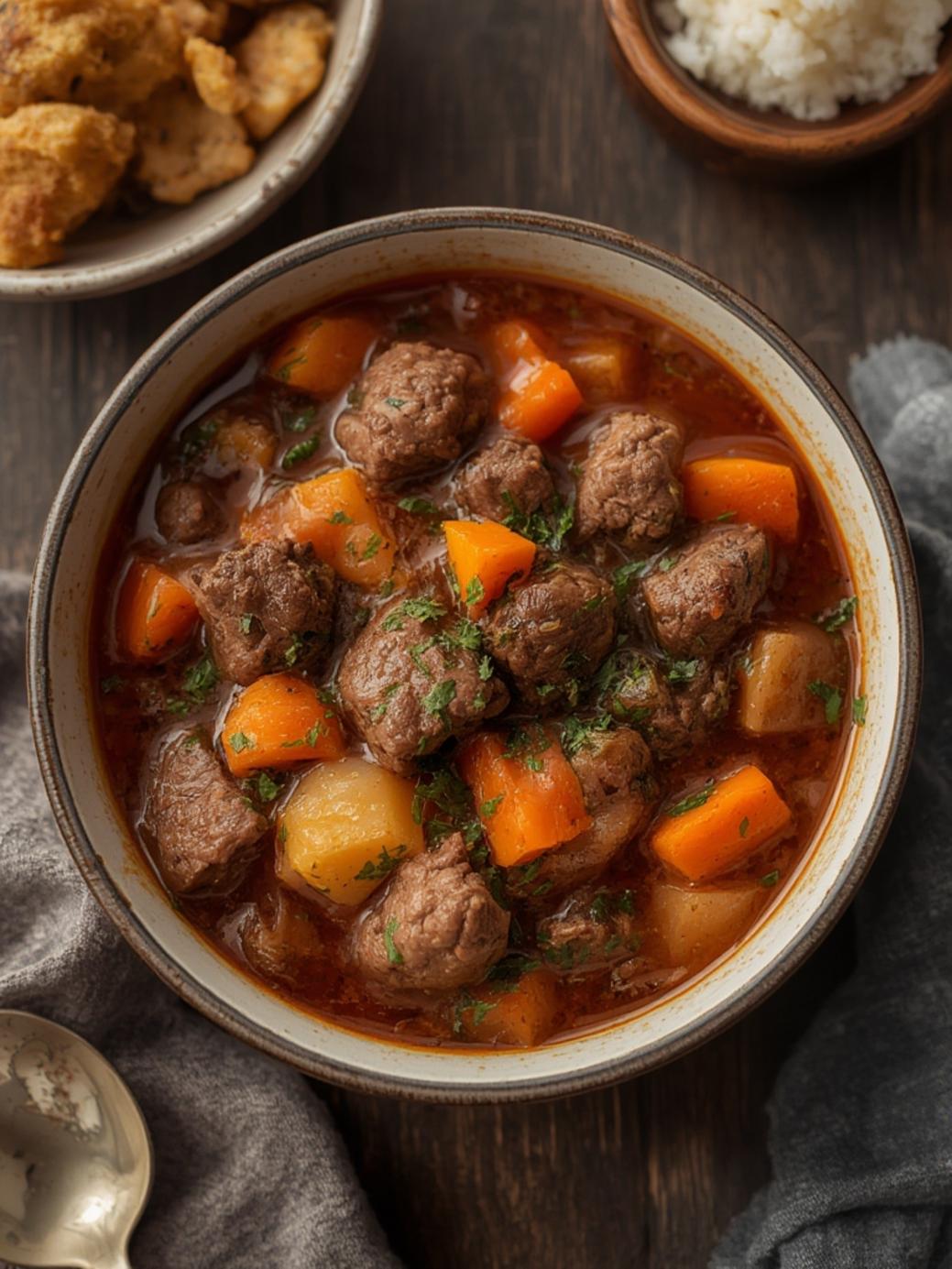
There’s nothing quite like the rich aroma of a simmering pot of Old Fashioned Beef Stew filling your home on a cold evening. This classic comfort food has stood the test of time for good reason – tender chunks of beef, hearty vegetables, and a flavorful broth combine to create a satisfying meal that nourishes both body and soul. Whether you’re looking to recreate your grandmother’s recipe or trying your hand at a hearty beef stew for the first time, this traditional dish offers a perfect blend of simplicity and depth of flavor that makes it a perennial family favorite across generations.
Ingredients & Kitchen Tools for Old Fashioned Beef Stew
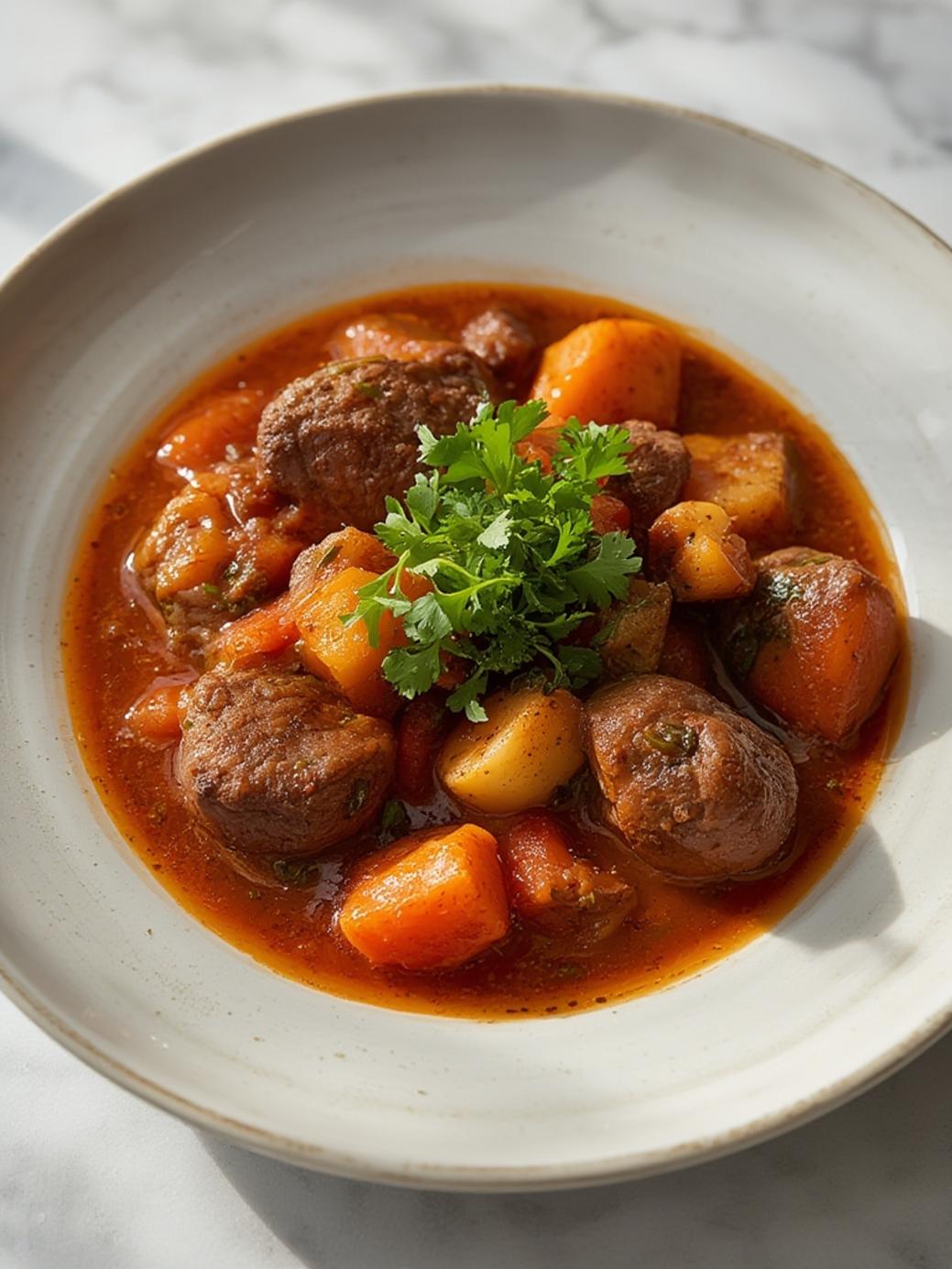
Main Ingredients:
– 2 pounds beef chuck, cut into 1-inch cubes
– 3 tablespoons all-purpose flour
– 2 tablespoons vegetable oil
– 1 large onion, diced
– 3 cloves garlic, minced
– 4 medium carrots, cut into 1-inch pieces
– 3 celery stalks, chopped
– 1 pound baby potatoes, halved
– 8 ounces button mushrooms, quartered
– 4 cups beef broth
– 1 cup dry red wine (optional, can substitute with additional broth)
– 2 tablespoons tomato paste
– 1 bay leaf
– 1 teaspoon dried thyme
– 1 teaspoon dried rosemary
– Salt and freshly ground black pepper to taste
– Fresh parsley for garnish
Kitchen Tools:
– Dutch oven or large heavy-bottomed pot
– Sharp knife and cutting board
– Measuring cups and spoons
– Wooden spoon
– Tongs
– Paper towels
Prep & Cooking Time for a Perfect Old Fashioned Beef Stew Dish
– Prep Time: 30 minutes
– Cook Time: 2 hours 30 minutes
– Total Time: 3 hours
– Servings: 6
This stew benefits from a slow cooking process, allowing the flavors to meld together and the meat to become perfectly tender. While it requires some patience, most of the cooking time is hands-off, giving you freedom to attend to other tasks.
Step-by-Step Instructions to Make Old Fashioned Beef Stew Easily
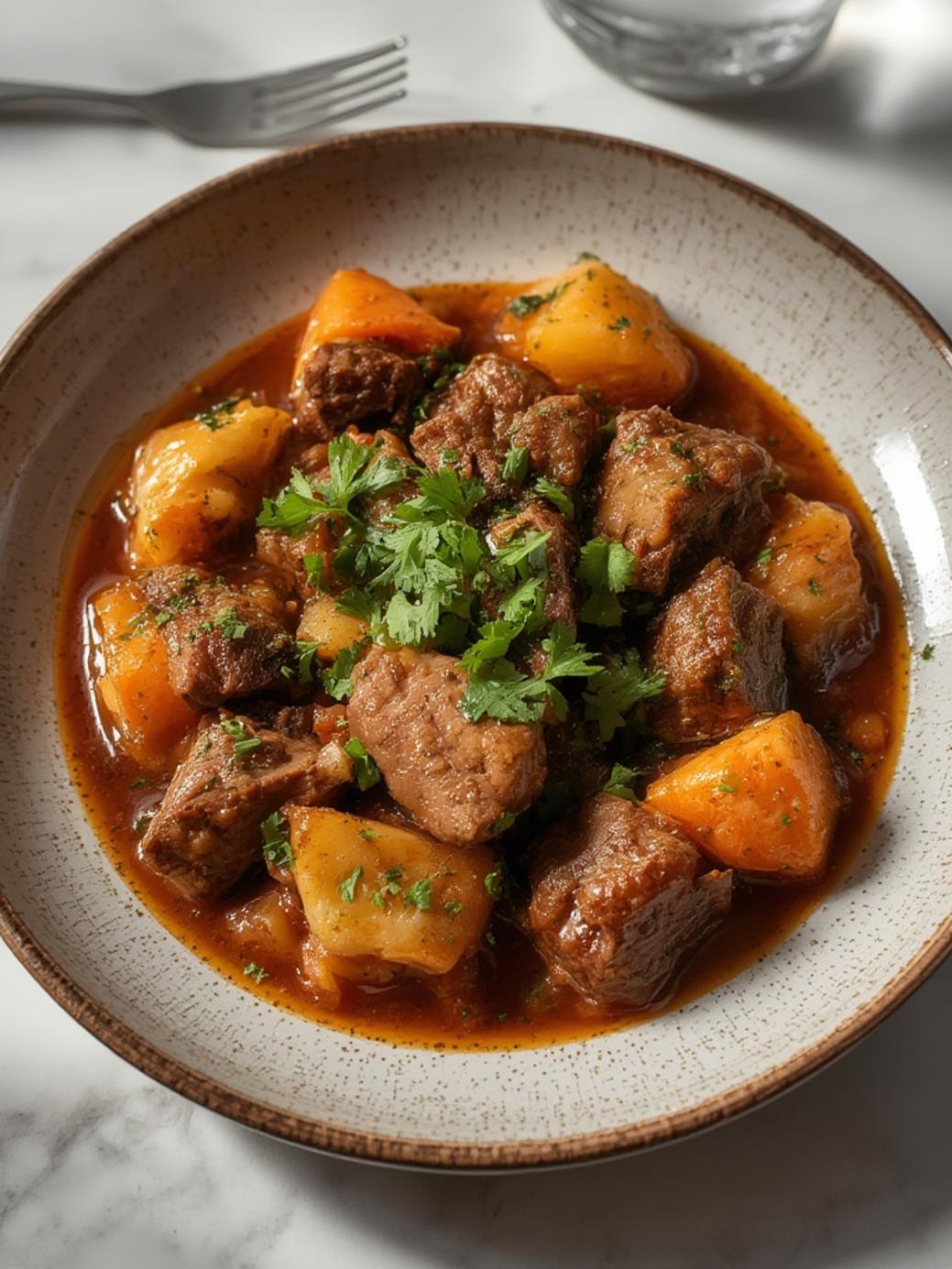
1. Prepare the beef: Pat the beef chunks dry with paper towels. Season generously with salt and pepper, then toss with flour until lightly coated.
2. Brown the meat: Heat oil in a Dutch oven over medium-high heat. Working in batches to avoid overcrowding, brown the beef on all sides (about 2-3 minutes per side). Transfer browned meat to a plate.
3. Sauté the aromatics: In the same pot, add onions and cook until translucent (about 5 minutes). Add garlic and cook for another 30 seconds until fragrant.
4. Deglaze the pot: Pour in the red wine (if using), scraping the bottom of the pot to loosen any browned bits. Let it simmer for 2 minutes.
5. Combine ingredients: Return the beef to the pot. Add carrots, celery, potatoes, mushrooms, beef broth, tomato paste, bay leaf, thyme, and rosemary. Stir to combine.
6. Simmer the stew: Bring to a boil, then reduce heat to low. Cover and simmer for about 2 hours, stirring occasionally, until the Old Fashioned Beef Stew meat is fork-tender and the hearty beef stew has thickened.
7. Adjust seasoning: Remove bay leaf. Taste and adjust salt and pepper as needed.
8. Serve: Ladle into bowls and garnish with fresh parsley.
Nutritional Benefits of This Old Fashioned Beef Stew Recipe
This nutrient-rich stew provides a well-balanced meal in a single bowl:
– Protein: The beef provides high-quality protein essential for muscle maintenance.
– Vitamins: Carrots supply vitamin A for eye health, while celery and potatoes offer B vitamins.
– Minerals: This dish delivers iron from beef and potassium from vegetables.
– Fiber: The vegetable medley provides dietary fiber for digestive health.
– Antioxidants: Garlic, onions, and herbs contain beneficial antioxidant compounds.
Variations, Substitutions & Cooking Tips for Old Fashioned Beef Stew Lovers
– Meat options: Try lamb for a gamier flavor or use venison for a leaner alternative.
– Vegetable variations: Add parsnips, turnips, or sweet potatoes for different flavor profiles.
– Gluten-free version: Use cornstarch instead of flour to thicken the stew.
– Slow cooker method: After browning the meat and sautéing aromatics, transfer everything to a slow cooker and cook on low for 7-8 hours.
– Pressure cooker option: Use an Instant Pot to reduce cooking time to about 35 minutes at high pressure.
Common Mistakes to Avoid When Preparing Old Fashioned Beef Stew
1. Skipping the browning step: This critical process creates depth of flavor through caramelization.
2. Overcrowding the pot: Brown meat in batches to ensure proper searing rather than steaming.
3. Cutting vegetables inconsistently: Uniform sizes ensure even cooking.
4. Cooking at too high heat: A gentle simmer yields tender meat, while boiling can make it tough.
5. Not giving it enough time: Patience is key for developing rich flavors and tender beef.
Storage & Reheating Tips to Keep Your Old Fashioned Beef Stew Fresh
– Refrigeration: Store cooled stew in airtight containers for up to 3 days.
– Freezing: Freeze in portion-sized containers for up to 3 months.
– Thawing: Defrost overnight in the refrigerator before reheating.
– Reheating: Warm slowly on the stovetop over medium-low heat, adding a splash of broth if needed to adjust consistency.
Conclusion: Final Thoughts on Making Old Fashioned Beef Stew at Home
Making Old Fashioned Beef Stew at home connects us with culinary traditions that have sustained families for generations. The beauty of this hearty beef stew lies in its accessibility—with basic ingredients and some patience, anyone can create a memorable meal that brings comfort and satisfaction. Remember that great stews improve with time, making this an excellent make-ahead dish for busy weeknights or weekend gatherings. Trust the process, embrace the aromas, and enjoy the rewarding experience of creating this timeless classic in your own kitchen.
FAQs About Cooking Old Fashioned Beef Stew
Q: What cut of beef is best for stew?
A: Chuck roast is ideal as it has good marbling, becomes tender with slow cooking, and offers rich flavor. Other good options include bottom round, rump roast, or shoulder cuts.
Q: Can I make this stew ahead of time?
A: Absolutely! In fact, this stew often tastes better the next day as flavors have more time to develop. It can be made 1-2 days in advance and reheated gently.
Q: How can I thicken my stew if it’s too watery?
A: Create a slurry with 1 tablespoon cornstarch and 2 tablespoons cold water. Stir this into the simmering stew and cook for an additional 5-10 minutes until thickened.
Q: Is it necessary to use wine in beef stew?
A: No, it’s optional. Wine adds complexity and acidity, but you can substitute with additional beef broth with a tablespoon of vinegar or lemon juice for brightness.
Q: Can I add different vegetables to my stew?
A: Certainly! Classic stews are versatile—feel free to incorporate seasonal vegetables like parsnips, turnips, peas, or green beans according to your preference.
Have You Tried Our Recipe?
There are no reviews yet. Be the first one to write one.