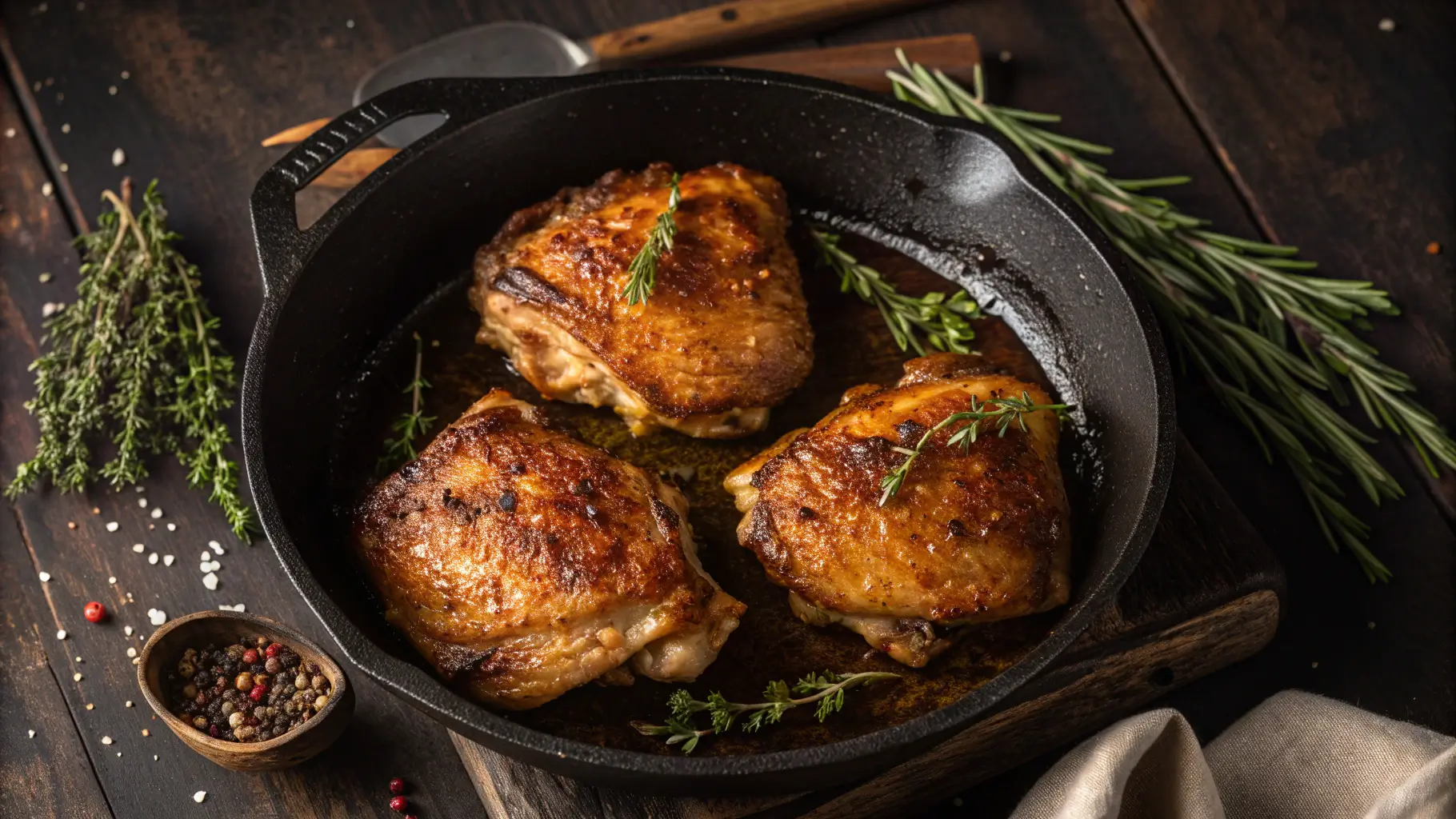
How to Make Boneless Skinless Chicken Thighs Crispy
Ever wondered why restaurant chicken thighs taste so much crispier than yours at home, even though you’re using the same cut? Here’s a surprising fact: most home cooks lose up to 60% of potential crispiness by skipping one crucial step that takes less than 5 minutes. Boneless skinless chicken thighs are incredibly forgiving and flavorful, but achieving that restaurant-quality crispy exterior requires understanding a few key techniques. Today, I’m sharing four proven methods that’ll transform your boneless skinless chicken thighs from rubbery to irresistibly crispy, and trust me, once you nail these techniques, you’ll never go back to boring chicken dinners again.
What You Need for Crispy Boneless Skinless Chicken Thighs
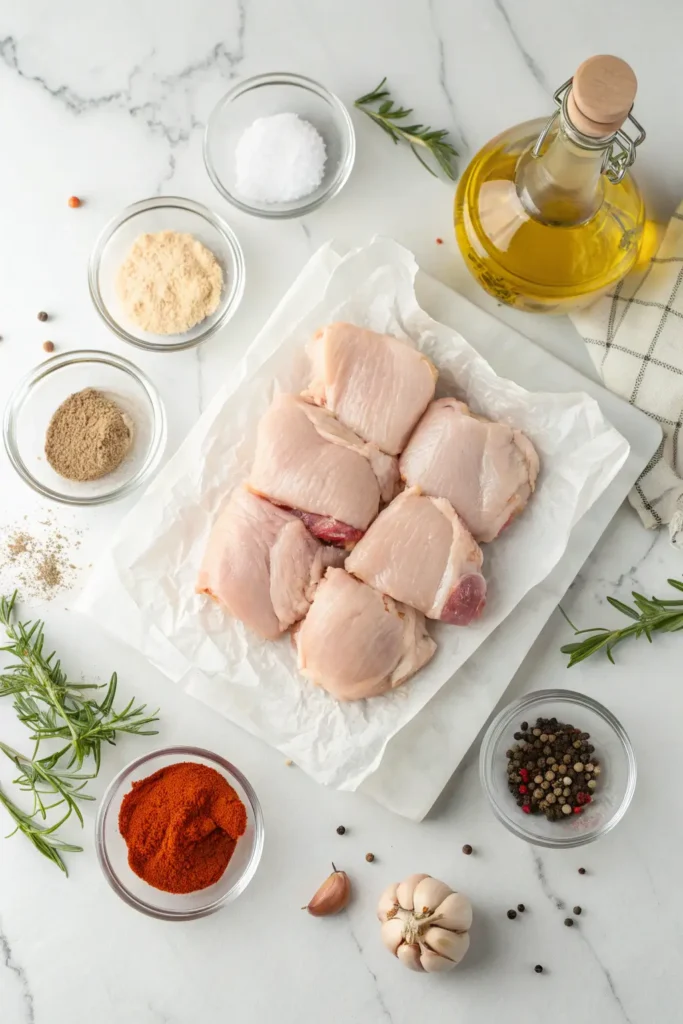
Here’s what you’ll need for perfectly crispy boneless skinless chicken thighs:
Main Ingredients:
- 6 boneless skinless chicken thighs (about 1.5-2 pounds)
- 2 tablespoons neutral oil (vegetable, canola, or avocado oil)
- 1 teaspoon kosher salt
- ½ teaspoon black pepper
- 1 teaspoon garlic powder
- ½ teaspoon paprika (smoked or regular)
Optional Coating Ingredients:
- ½ cup cornstarch or all-purpose flour
- 1 tablespoon baking powder (for extra crunch)
- 2 tablespoons breadcrumbs or panko
Substitution Ideas:
- No cornstarch? Use potato starch or rice flour for an equally crispy coating
- Out of garlic powder? Fresh minced garlic works beautifully
- For gluten-free options, swap regular flour with almond flour or gluten-free breadcrumbs
- Prefer olive oil? It works great, though it has a lower smoke point
How Long to Cook Boneless Skinless Chicken Thighs
Preparation Time: 15 minutes (including drying and seasoning)
Cooking Time: 20-25 minutes (varies by method)
Total Time: 35-40 minutes
This timing is approximately 25% faster than traditional bone-in thighs, making boneless skinless chicken thighs perfect for weeknight dinners. The key is that you can go straight from fridge to crispy perfection in under an hour!
4 Methods to Crisp Boneless Skinless Chicken Thighs

Method 1: The Pan-Searing Technique
Step 1: Pat Dry Thoroughly
Remove your boneless skinless chicken thighs from the packaging and pat them completely dry with paper towels. This is the golden rule of crispiness—moisture is your enemy! Press firmly to remove every bit of surface moisture.
Step 2: Season Generously
Sprinkle both sides with salt, pepper, garlic powder, and paprika. Don’t be shy here; the seasoning creates a flavorful crust that enhances crispiness.
Step 3: Heat Your Pan Properly
Place a heavy-bottomed skillet (cast iron works phenomenally) over medium-high heat. Add oil and let it heat until it shimmers—about 2-3 minutes. You’ll know it’s ready when a drop of water sizzles immediately.
Step 4: Sear Without Moving
Place the thighs presentation-side down (the prettier side) and resist the urge to move them for 6-7 minutes. This undisturbed cooking time allows the Maillard reaction to work its magic, creating that gorgeous golden-brown crust.
Step 5: Flip and Finish
Flip once and cook for another 5-6 minutes until the internal temperature reaches 165°F. The thighs should release easily from the pan when properly seared.
Method 2: The Cornstarch Coating Method
Step 1: Prepare the Coating Station
Mix cornstarch, salt, pepper, and baking powder in a shallow dish. The baking powder raises the pH, helping proteins brown faster and creating extra crispiness.
Step 2: Coat Each Thigh
Dredge each dried chicken thigh in the cornstarch mixture, pressing gently to ensure even coverage. Shake off excess—you want a light, even coating, not a thick crust.
Step 3: Let Them Rest
Here’s a pro tip: let the coated thighs sit for 5 minutes before cooking. This allows the coating to adhere better and hydrate slightly, creating a crispier final result.
Step 4: Pan-Fry to Perfection
Heat oil in your skillet over medium-high heat and cook the coated thighs for 5-6 minutes per side until deeply golden and crispy.
Method 3: The Oven-Baking Method
Step 1: Preheat Your Oven High
Set your oven to 425°F and position the rack in the upper third. This high heat is essential for achieving crispiness without a traditional skin.
Step 2: Prepare a Wire Rack
Place a wire rack over a baking sheet. This allows hot air to circulate around the chicken, crisping all sides evenly instead of steaming the bottom.
Step 3: Oil and Season
Brush boneless skinless chicken thighs with oil on all sides, then season generously. The oil helps conduct heat and promotes browning.
Step 4: Bake and Monitor
Bake for 20-25 minutes, flipping halfway through. For extra crispiness, broil for the final 2-3 minutes, watching carefully to prevent burning.
Method 4: The Air Fryer Approach
Step 1: Preheat Your Air Fryer
Set it to 400°F for 5 minutes. Preheating ensures immediate searing when the chicken hits the basket.
Step 2: Arrange in a Single Layer
Place seasoned boneless skinless chicken thighs in the basket without touching. Overcrowding creates steam, which is crispiness’s nemesis.
Step 3: Air Fry in Stages
Cook for 10 minutes, flip, then cook another 8-10 minutes. The circulating hot air creates an incredibly crispy exterior while keeping the inside juicy.
Step 4: Rest Before Serving
Let them rest for 3-4 minutes after cooking. This redistributes the juices and allows the crust to set perfectly.
Boneless Skinless Chicken Thighs Nutrition Facts
Per serving (1 chicken thigh, approximately 4 oz cooked):
- Calories: 180-220 (depending on cooking method and oil used)
- Protein: 26-28g
- Fat: 8-12g (varies with cooking oil)
- Saturated Fat: 2-3g
- Carbohydrates: 0-8g (higher with coating)
- Fiber: 0-1g
- Sodium: 350-450mg
- Cholesterol: 95-110mg
- Iron: 1.2mg (7% DV)
- Vitamin B12: 0.5mcg (20% DV)
Boneless skinless chicken thighs provide 15% more iron than chicken breast and are rich in selenium, zinc, and B vitamins. The darker meat contains more myoglobin, which supports oxygen transport in your muscles.
Making Boneless Skinless Chicken Thighs Healthier
Reduce Oil Content:
Use an air fryer or baking method instead of pan-frying to cut fat calories by up to 40%. You can also use a light oil spray instead of brushing with oil.
Boost Fiber and Nutrients:
Add crushed nuts (almonds or walnuts) to your coating mixture for extra crunch, healthy fats, and fiber. This adds nutritional value without sacrificing texture.
Lower Sodium Options:
Replace garlic powder with fresh garlic and use herbs like rosemary, thyme, or oregano to add flavor complexity without extra sodium.
Gluten-Free Modifications:
Substitute regular flour with almond flour, coconut flour, or certified gluten-free breadcrumbs. These alternatives often provide extra crispiness!
Add Vegetables:
Roast vegetables alongside your chicken thighs using the oven method. Brussels sprouts, carrots, or broccoli benefit from the same high heat and add nutritional balance to your meal.
Best Ways to Serve Boneless Skinless Chicken Thighs

Crispy boneless skinless chicken thighs are incredibly versatile! Here are some crowd-pleasing serving ideas:
Over Grains:
Serve over fluffy rice, quinoa, or cauliflower rice with a drizzle of tahini sauce or chimichurri for a complete meal.
In Tacos or Wraps:
Slice the crispy chicken and tuck it into warm tortillas with cabbage slaw, pickled onions, and creamy avocado sauce.
Alongside Salads:
Place warm, sliced chicken over mixed greens with cherry tomatoes, cucumbers, and a zesty vinaigrette for a protein-packed salad.
With Classic Sides:
Pair with mashed potatoes, roasted vegetables, or mac and cheese for a comforting dinner everyone will love.
Asian-Inspired Bowl:
Serve over steamed rice with stir-fried vegetables, drizzle with teriyaki or sweet chili sauce, and garnish with sesame seeds and scallions.
Mediterranean Style:
Accompany with hummus, pita bread, cucumber-tomato salad, and tzatziki for a fresh, light meal.
Boneless Skinless Chicken Thighs Cooking Mistakes to Avoid
Mistake #1: Skipping the Drying Step
This is the number one reason for soggy chicken! Surface moisture prevents proper browning and creates steam instead of a crispy crust. Always pat completely dry.
Mistake #2: Overcrowding the Pan
When chicken pieces touch, they steam rather than sear. Leave at least an inch between thighs, and cook in batches if necessary.
Mistake #3: Moving the Chicken Too Soon
Flipping too early prevents crust formation. Wait until the chicken releases naturally from the pan—if it’s sticking, it’s not ready yet.
Mistake #4: Using Cold Chicken
Chicken straight from the fridge cools down your cooking surface, preventing proper searing. Let it sit at room temperature for 15-20 minutes before cooking.
Mistake #5: Not Using a Thermometer
Guessing doneness leads to either undercooked (unsafe) or overcooked (dry) chicken. Invest in an instant-read thermometer and aim for exactly 165°F.
Mistake #6: Cutting Too Soon
Slicing immediately after cooking releases all those precious juices. Rest for at least 3-5 minutes to keep your chicken moist inside with a crispy outside.
How to Store Boneless Skinless Chicken Thighs
Refrigerator Storage:
Store cooked boneless skinless chicken thighs in an airtight container for up to 4 days. Place parchment paper between layers to prevent sticking.
Maintaining Crispiness:
The enemy of crispy leftovers is moisture. Store chicken uncovered in the fridge for the first hour to let steam escape, then cover. To reheat, use an oven or air fryer at 375°F for 5-7 minutes rather than microwaving, which creates sogginess.
Freezing Instructions:
Freeze cooked chicken in a single layer on a baking sheet for 1-2 hours, then transfer to freezer bags. This prevents pieces from sticking together. Properly frozen chicken thighs last up to 3 months.
Meal Prep Strategy:
Season raw boneless skinless chicken thighs and store them in marinade bags for up to 2 days before cooking. This saves time and infuses extra flavor.
Reheating for Best Results:
Thaw frozen chicken overnight in the refrigerator. Reheat in a 375°F oven or air fryer for 8-10 minutes until heated through and crispy again.
Mastering Crispy Boneless Skinless Chicken Thighs
Mastering crispy boneless skinless chicken thighs comes down to four essential techniques: thorough drying, proper heat management, minimal movement during cooking, and letting them rest afterward. Whether you choose pan-searing, coating with cornstarch, oven-baking, or air frying, each method delivers restaurant-quality results at home. These versatile, flavorful chicken thighs cook faster than bone-in cuts while staying incredibly juicy inside with that coveted crispy exterior.
Ready to transform your chicken game? Try one of these methods tonight and share your results in the review section below! Tell us which technique worked best for you, or drop a comment on our blog with your favorite seasoning combinations. Don’t forget to subscribe for more foolproof cooking tips and weeknight dinner solutions delivered straight to your inbox!
Boneless Skinless Chicken Thighs: Your Questions Answered
Q: Can I make boneless skinless chicken thighs crispy without oil?
A: Yes! The air fryer method requires minimal to no oil while still achieving excellent crispiness. You can also use parchment paper in the oven and rely on high heat (425°F+) to create browning without adding fat.
Q: Why are my chicken thighs tough instead of crispy?
A: Overcooking is usually the culprit. Dark meat becomes tough when cooked beyond 175°F. Use a meat thermometer and remove thighs at exactly 165°F for the best texture—juicy inside, crispy outside.
Q: Do I need to marinate boneless skinless chicken thighs for them to be crispy?
A: Marinating adds flavor but isn’t necessary for crispiness. In fact, wet marinades can hinder crust formation. If you marinate, pat the chicken completely dry before cooking and consider using dry rubs instead.
Q: What’s the best pan for getting crispy chicken thighs?
A: Cast iron or stainless steel skillets work best because they retain heat exceptionally well and can handle high temperatures. Non-stick pans are convenient but often don’t get hot enough for optimal browning.
Q: Can I prepare these ahead for meal prep?
A: Absolutely! Cook all four methods ahead of time and store properly. The oven-baked and air fryer methods reheat particularly well, maintaining much of their original crispiness when reheated at high temperature.
Q: How do I know when my chicken thighs are done without cutting into them?
A: An instant-read thermometer is your best friend—insert it into the thickest part and look for 165°F. Alternatively, the juices should run clear, and the meat should feel firm but not hard when pressed.
Q: Can I use frozen boneless skinless chicken thighs?
A: For best results, thaw completely in the refrigerator overnight. Cooking from frozen adds moisture and prevents proper crisping. If you’re in a rush, use the cold water thawing method, then dry thoroughly before cooking.
Have You Tried Our Recipe?
There are no reviews yet. Be the first one to write one.