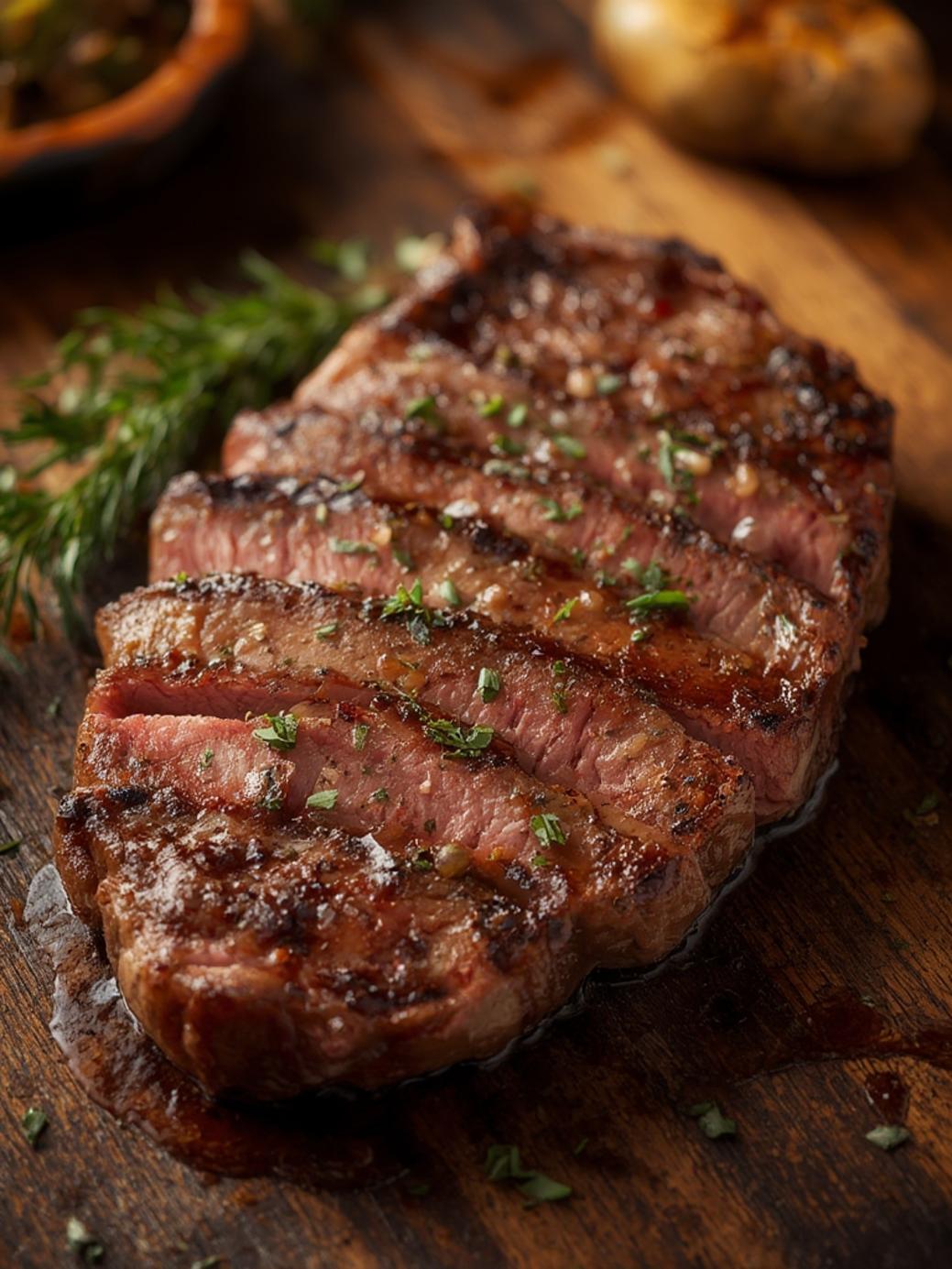
There’s something uniquely satisfying about preparing a perfectly cooked Flat Iron Steak at home. This underrated cut delivers exceptional flavor and tenderness when prepared correctly, rivaling more expensive options like ribeye or filet mignon. Today, I’ll share a foolproof Flat Iron Steak Recipe that brings restaurant-quality results to your dinner table without the hefty price tag. The beautiful marbling and rich beef flavor make this cut perfect for a special weeknight dinner or weekend gathering with friends.
Ingredients & Kitchen Tools for Flat Iron Steak
For the Steak:
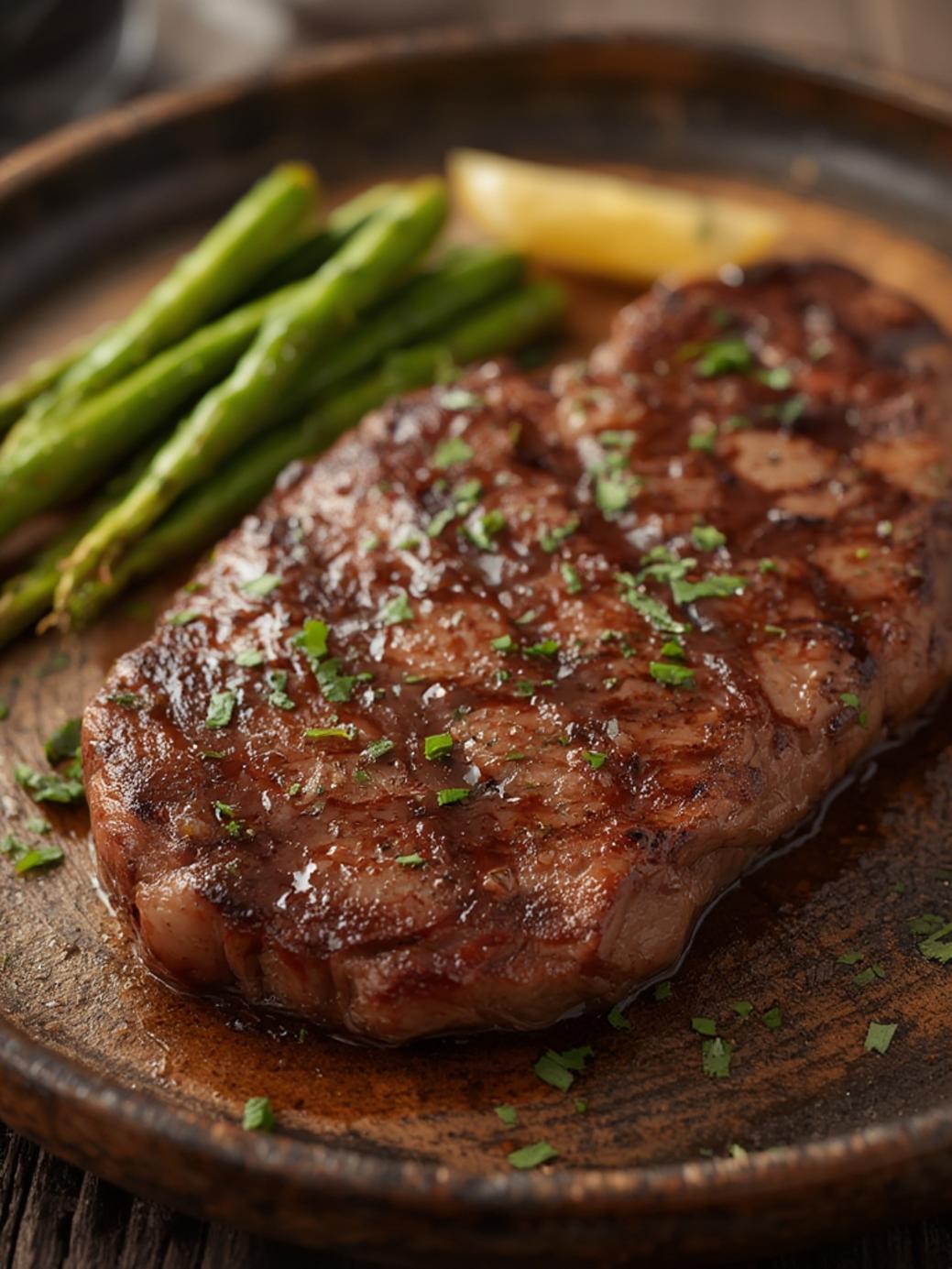
– 1½ pounds flat iron steak (about 1-inch thick)
– 2 tablespoons olive oil
– 2 tablespoons unsalted butter
– 4 cloves garlic, lightly crushed
– 2-3 sprigs fresh rosemary
– 2 sprigs fresh thyme
For the Marinade:
– 3 tablespoons soy sauce
– 2 tablespoons Worcestershire sauce
– 2 tablespoons balsamic vinegar
– 1 tablespoon honey
– 2 cloves garlic, minced
– 1 teaspoon freshly ground black pepper
– 1 teaspoon Dijon mustard
Kitchen Tools:
– Cast iron skillet or heavy-bottomed pan
– Instant-read meat thermometer
– Tongs
– Cutting board
– Sharp chef’s knife
– Small bowl for marinade
– Plastic zip-top bag or shallow dish for marinating
– Aluminum foil
Prep & Cooking Time for a Perfect Flat Iron Steak Dish
– Prep Time: 15 minutes (plus 2-8 hours for marinating)
– Cook Time: 10-12 minutes
– Resting Time: 10 minutes
– Total Time: 35-45 minutes (not including marinating time)
Step-by-Step Instructions to Make Flat Iron Steak Easily
1. Prepare the marinade: In a small bowl, whisk together soy sauce, Worcestershire sauce, balsamic vinegar, honey, minced garlic, black pepper, and Dijon mustard until well combined.
2. Marinate the steak: Place your Flat Iron Steak in a zip-top bag or shallow dish and pour the marinade over it. Ensure the meat is evenly coated, then seal and refrigerate for at least 2 hours (or up to 8 hours for more intense flavor). Following this Flat Iron Steak Recipe closely during the marinating process is crucial for developing maximum flavor.
3. Bring to room temperature: Remove the steak from the refrigerator 30-45 minutes before cooking to allow it to come to room temperature.
4. Preheat your skillet: Heat a cast iron skillet over high heat until it’s smoking hot.
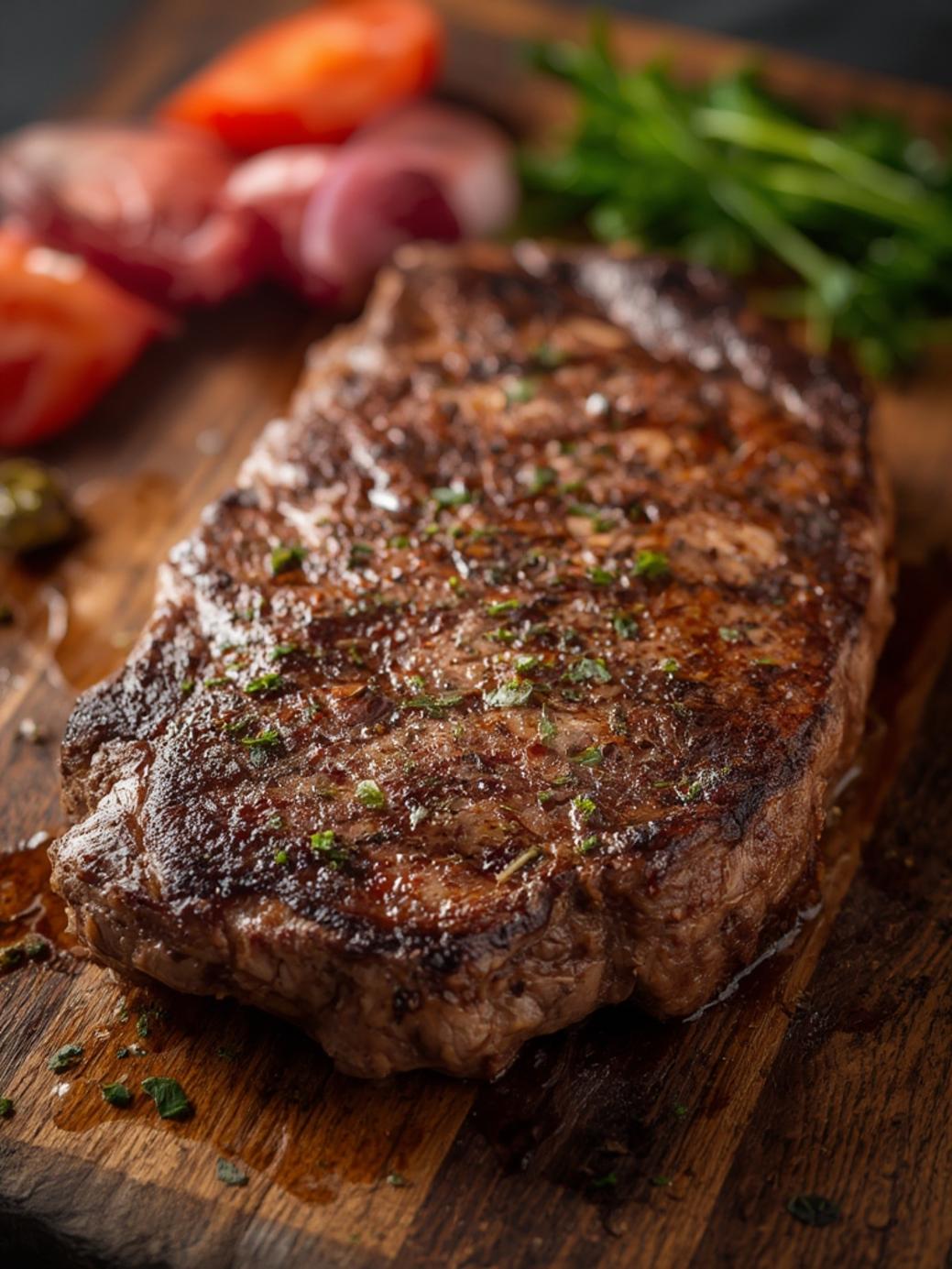
5. Cook the steak: Remove the steak from the marinade and pat dry with paper towels. Add olive oil to the hot skillet, then carefully place the steak in the pan. Sear for 3-4 minutes on each side for medium-rare (internal temperature of 135°F).
6. Add aromatics: During the last 2 minutes of cooking, reduce heat to medium-low, add butter, crushed garlic cloves, and herb sprigs. Tilt the pan slightly and spoon the melted butter mixture over the steak continuously.
7. Rest the meat: Transfer the steak to a cutting board, cover loosely with foil, and let rest for 10 minutes to allow juices to redistribute.
8. Slice and serve: Cut the steak against the grain into ¼-inch slices and serve immediately.
Nutritional Benefits of This Flat Iron Steak Recipe
This dish isn’t just delicious—it’s nutritionally valuable too. A 4-ounce serving provides approximately:
– Calories: 250
– Protein: 27g
– Fat: 15g
– Iron: 15% of daily value
– Zinc: 40% of daily value
– B vitamins: especially rich in B12 and niacin
– Selenium: important for thyroid health and immunity
Variations, Substitutions & Cooking Tips for Flat Iron Steak Lovers
– Herb variations: Try chimichurri, blue cheese butter, or mushroom sauce as flavorful toppings.
– Cooking methods: While pan-searing delivers excellent results, grilling works wonderfully too (8-10 minutes total over medium-high heat).
– Wine pairing: Serve with a bold red wine like Cabernet Sauvignon or Malbec.
– Meal pairings: Complement with roasted potatoes, grilled asparagus, or a simple arugula salad.
Common Mistakes to Avoid When Preparing Flat Iron Steak
1. Skipping the rest period: Always let your steak rest after cooking to prevent juices from escaping when cut.
2. Cutting with the grain: Always slice against the grain for maximum tenderness.
3. Overcooking: This cut shines at medium-rare to medium doneness; cooking beyond medium will toughen the meat.
4. Not using a meat thermometer: Temperature is the most reliable indicator of doneness.
Storage & Reheating Tips to Keep Your Flat Iron Steak Fresh
– Refrigeration: Store leftovers in an airtight container for up to 3-4 days.
– Reheating: For best results, reheat gently in a 275°F oven until just warmed through (about 15-20 minutes). Alternatively, slice thinly and warm briefly in a skillet with a splash of beef broth.
– Freezing: Wrap tightly in plastic wrap, then foil, and freeze for up to 3 months.
Conclusion: Final Thoughts on Making Flat Iron Steak at Home
Mastering the perfect Flat Iron Steak at home opens up endless possibilities for impressive, restaurant-quality meals without leaving your kitchen. This Flat Iron Steak Recipe balances simplicity with sophisticated flavor, making it approachable for home cooks while delivering spectacular results. Whether you’re cooking for a special occasion or elevating your weeknight dinner rotation, this underrated cut deserves a regular spot in your culinary repertoire.
FAQs About Cooking Flat Iron Steak
1. What is flat iron steak and why is it so tender?
Flat iron steak comes from the shoulder (chuck) of the cow but is remarkably tender because the connective tissue is removed during butchering. It’s the second most tender cut after filet mignon when prepared properly.
2. Can I substitute another cut if I can’t find flat iron steak?
Yes, flank steak, hanger steak, or skirt steak can work as alternatives, though cooking times may vary slightly due to differences in thickness and fat content.
3. Why is my flat iron steak tough?
Toughness usually results from overcooking or slicing with the grain instead of against it. For optimal tenderness, cook to medium-rare and always slice perpendicular to the muscle fibers.
4. Is it necessary to marinate flat iron steak?
While not absolutely necessary due to its natural tenderness, marinating enhances flavor and can further tenderize the meat. Even a quick 30-minute marinade makes a noticeable difference.
5. How can I tell when my flat iron steak is done without a thermometer?
The finger test works well: press the meat with your finger—if it feels like the base of your thumb when touching your index finger (soft but with some resistance), it’s medium-rare. However, a thermometer is always more reliable.