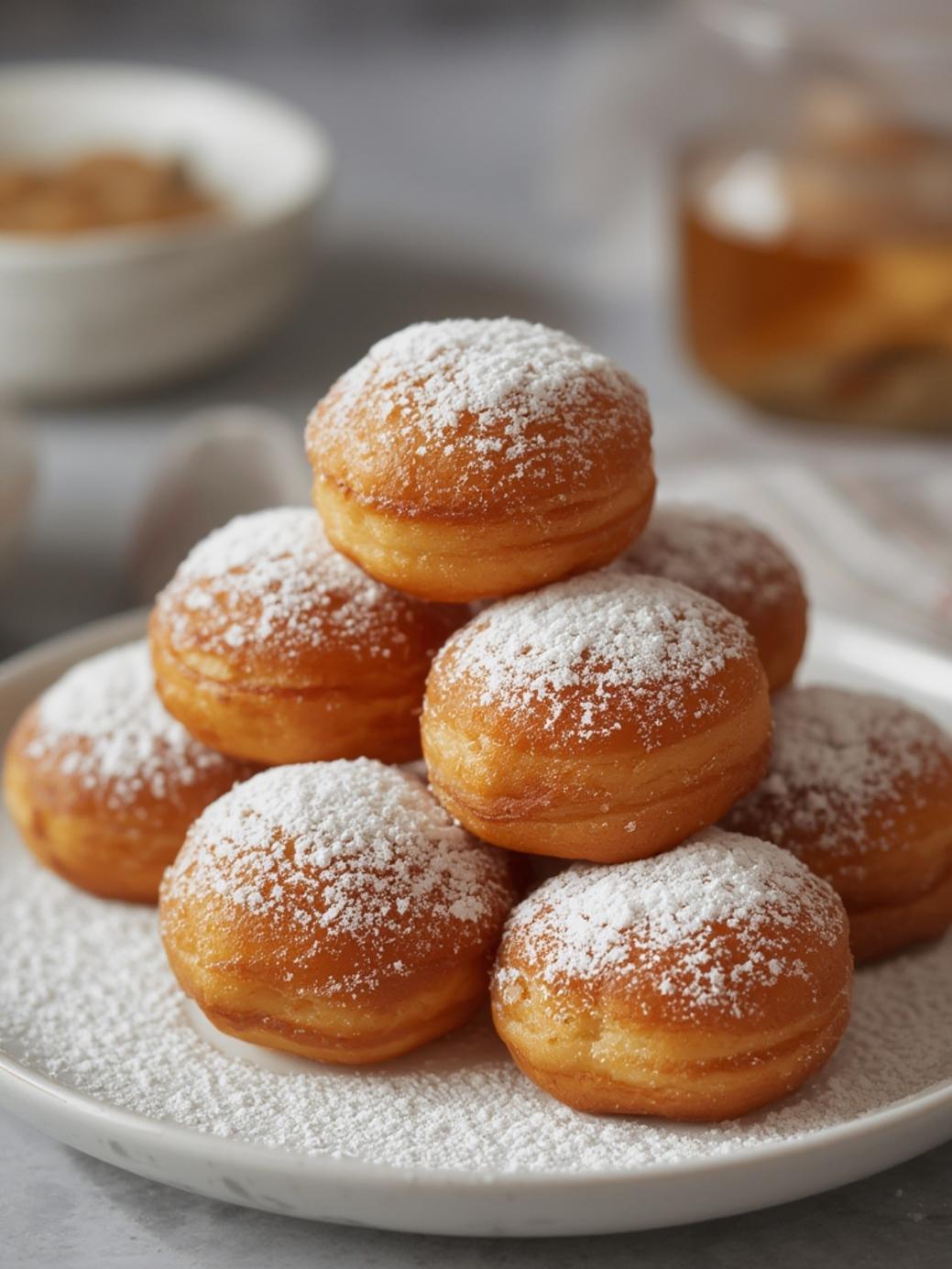
There’s something utterly enchanting about the delicate, powdery puffs known as Vanilla French Beignets. These pillowy squares of fried dough, dusted generously with powdered sugar, transport you straight to the charming cafés of Paris or the bustling streets of French Beignets New Orleans style. The contrast between the crisp exterior and the soft, airy interior creates a textural symphony that makes these treats irresistible. Today, I’ll guide you through creating these delectable pastries at home, bringing the magic of French patisserie to your kitchen with an authentic recipe that honors both the Parisian tradition and the beloved New Orleans variation.
Ingredients & Kitchen Tools for Vanilla French Beignets
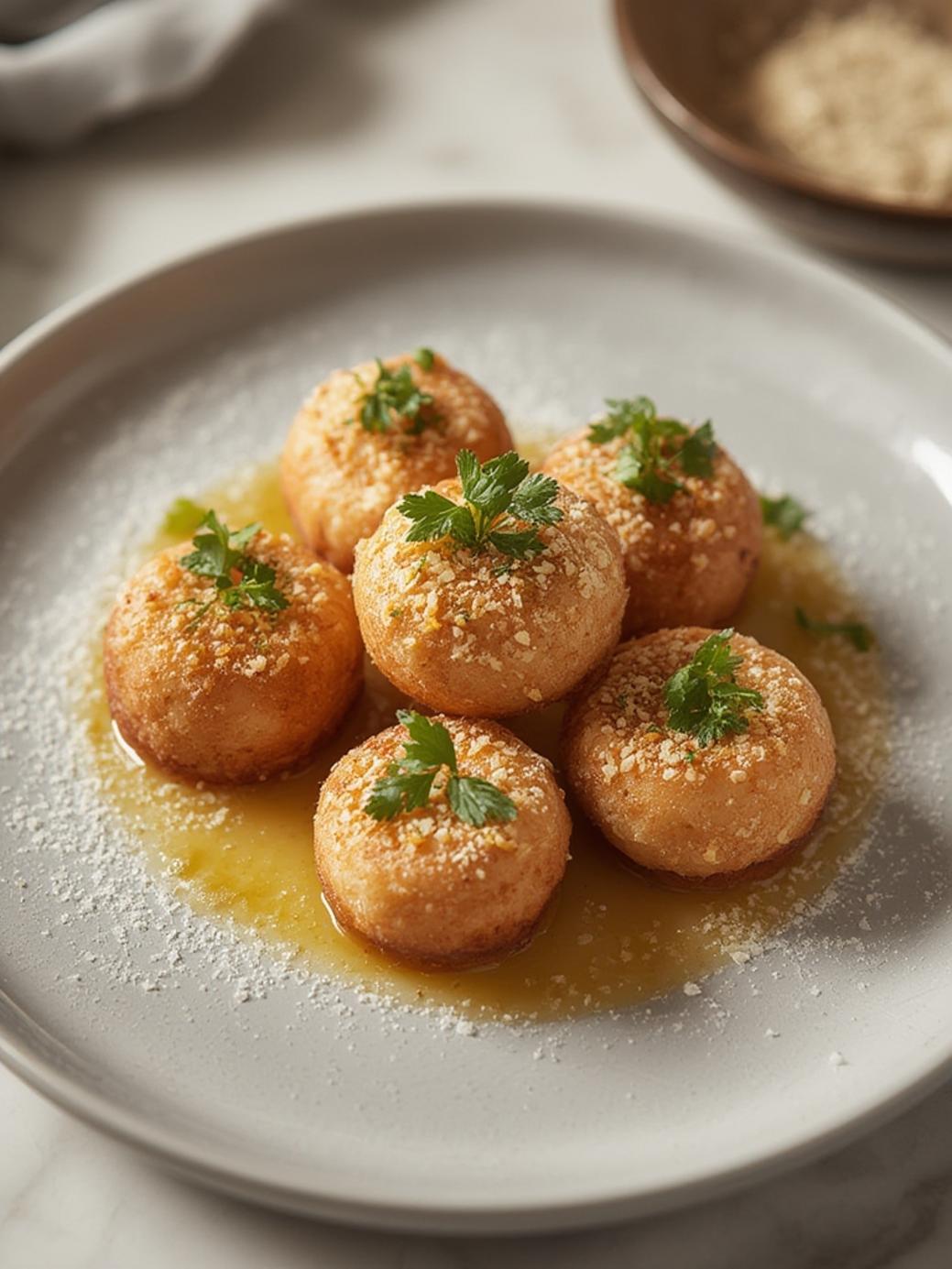
For the Dough:
– 2¼ teaspoons active dry yeast (1 packet)
– 1½ cups warm water (110°F)
– ½ cup granulated sugar
– 1 teaspoon salt
– 2 large eggs, beaten
– 1 cup evaporated milk
– 7 cups all-purpose flour
– ¼ cup unsalted butter, softened
– 2 teaspoons pure vanilla extract
– Vegetable oil for frying (about 2-3 quarts)
– 2 cups powdered sugar for dusting
Kitchen Tools:
– Large mixing bowl or stand mixer
– Rolling pin
– Sharp knife or pizza cutter
– Deep-fry thermometer
– Large heavy-bottomed pot
– Spider strainer or slotted spoon
– Paper towels
– Cooling rack
– Sifter (for powdered sugar)
Prep & Cooking Time for a Perfect Vanilla French Beignets Dish
– Prep Time: 30 minutes
– Rising Time: 1 hour to overnight
– Cooking Time: 20-25 minutes
– Total Time: Approximately 2 hours (not including overnight rising)
– Yield: About 3 dozen beignets
Step-by-Step Instructions to Make Vanilla French Beignets Easily
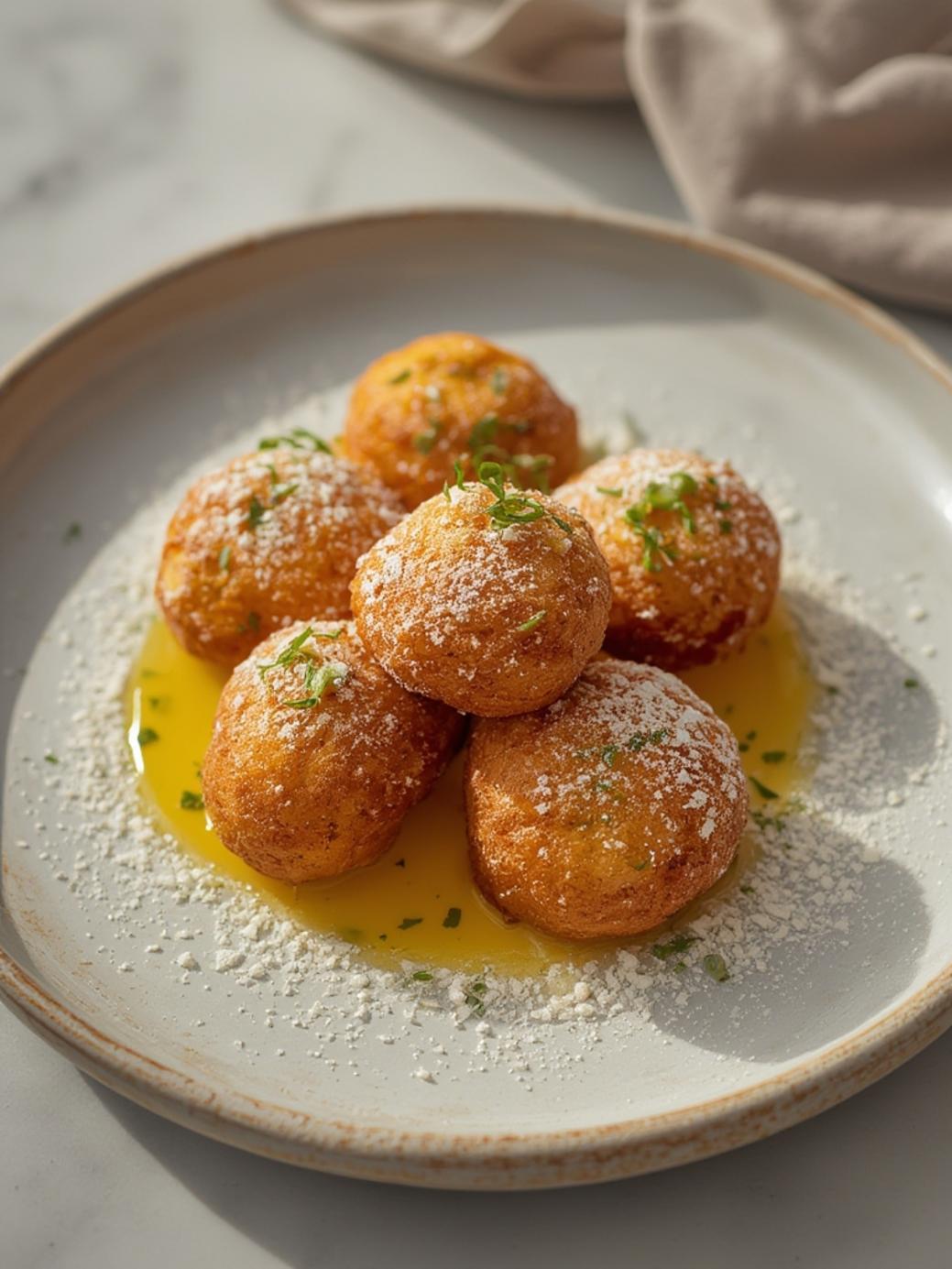
1. Activate the yeast: In a large bowl, combine the warm water, sugar, and yeast. Let stand for 10 minutes until foamy.
2. Create the dough: Add the salt, eggs, and evaporated milk to the yeast mixture. Gradually incorporate 4 cups of flour, mixing until smooth. Add the softened butter and vanilla extract, blending thoroughly. Gradually add the remaining flour until a soft dough forms.
3. Knead the dough: On a floured surface, knead the dough for about 5-7 minutes until smooth and elastic. The authentic Vanilla French Beignets require proper kneading to achieve that characteristic chew that distinguishes them from regular donuts.
4. First rise: Place the dough in a greased bowl, cover with plastic wrap, and let rise in a warm place for 1 hour or refrigerate overnight. The slow fermentation enhances the flavor profile typical of French Beignets New Orleans style.
5. Roll and cut: After rising, roll the dough on a floured surface to ¼-inch thickness. Cut into 2½-inch squares.
6. Second rise: Place the squares on parchment-lined baking sheets, cover loosely, and let rise for 30-45 minutes.
7. Heat oil: In a large heavy pot, heat 2-3 inches of oil to 350°F.
8. Fry the beignets: Carefully drop 3-4 squares into the hot oil. They will puff up immediately. Fry for about 1-2 minutes per side until golden brown.
9. Drain and dust: Remove with a slotted spoon and drain on paper towels. While still warm, generously dust with powdered sugar.
10. Serve immediately: Beignets are best enjoyed fresh with a cup of café au lait or hot chocolate.
Nutritional Benefits of This Vanilla French Beignets Recipe
While beignets are certainly an indulgence, they do offer some nutritional value. The eggs provide protein, and if you use whole milk, you’ll get calcium and vitamin D. The treat aspect comes from the carbohydrates that provide quick energy. Moderation is key—remember that a traditional serving in New Orleans is three beignets, not a whole batch!
Variations, Substitutions & Cooking Tips for Vanilla French Beignets Lovers
– Chocolate-filled variation: Before the second rise, place a small piece of chocolate in the center of each square and seal the edges.
– Flavor infusions: Add orange zest, cinnamon, or nutmeg to the dough for aromatic variations.
– Dairy-free option: Substitute coconut milk for evaporated milk and use plant-based butter.
– Air fryer method: Spray with oil and air fry at 350°F for 3-4 minutes for a lighter version.
Common Mistakes to Avoid When Preparing Vanilla French Beignets
– Overworking the dough: This makes tough beignets. Mix just until combined.
– Incorrect oil temperature: Too cold, and they absorb oil; too hot, and they burn outside while remaining raw inside.
– Rolling too thin or thick: Aim for ¼-inch precisely for the perfect texture.
– Overcrowding the pot: This lowers the oil temperature and results in greasy beignets.
Storage & Reheating Tips to Keep Your Vanilla French Beignets Fresh
– Fresh is best: Beignets are optimal when served immediately after frying.
– Short-term storage: Keep in an airtight container at room temperature for up to 24 hours.
– Reheating: Warm in a 350°F oven for 3-5 minutes to restore crispness.
– Freezing dough: The cut, unfried dough squares can be frozen for up to 1 month.
Conclusion: Final Thoughts on Making Vanilla French Beignets at Home
Creating Vanilla French Beignets at home connects you to centuries of French culinary tradition. The joy of biting into these pillowy confections, with their cloud-like interiors and sweet, powdery exteriors, is unmatched. Whether you’re recreating memories of a Parisian vacation or channeling the spirit of French Beignets New Orleans style, these delightful pastries bring a touch of celebration to any occasion. Master this recipe, and you’ll always have a crowd-pleasing treat in your culinary repertoire.
FAQs About Cooking Vanilla French Beignets
Can I make the dough ahead of time?
Yes! The dough actually benefits from slow fermentation in the refrigerator overnight, developing more complex flavors.
Why are my beignets dense instead of fluffy?
This typically happens when the dough isn’t properly risen or the oil temperature is too low. Ensure your yeast is fresh and active, and always use a thermometer to maintain 350°F oil temperature.
Can I bake beignets instead of frying them?
While traditional beignets are fried, you can bake them at 400°F for 10-12 minutes for a lighter version, though the texture will be different.
What’s the difference between beignets and donuts?
Beignets use a yeasted dough without holes, are typically square-shaped, always dusted with powdered sugar (never glazed), and have a lighter, airier texture than most donuts.
Why do my beignets deflate after frying?
This usually happens when they’re undercooked. Ensure they’re golden brown on both sides before removing from the oil, and don’t rush the process.
Have You Tried Our Recipe?
There are no reviews yet. Be the first one to write one.